Wednesday, March 20, 2013

Immigration Speech


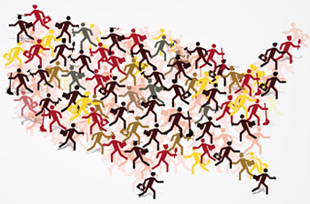
With the charged reactions we have seen across the country towards illegal aliens and failed political reforms in Congress, the topic of immigration has once again become a source of fresh debate in America. Some are speaking out and standing behind progressive reforms. Other are protesting and showing their dissent towards the policies of the State. Yet everywhere, these people share a common burden, and it is that the country’s immigration policies are fundamentally broken.

Tensions around immigration issues are nothing new. As a State, we have always defined ourselves as a country of immigrants — a country that welcomes those who are willing to encompass the core of America’s traditions and values. Surely, it is this flow of immigrants that has shaped America into what it is today. The breakthroughs of Albert Einstein or Nikola Tesla, for example, would not have been possible without the ingenuity and bright labor of immigrants.

However, there are also a million others—the quiet acts who never got to write their names into the history books, yet were no less momentous in shaping this country — the masses who faced distress and great adversity to reach America’s shores in search of a more fruitful life for themselves and their loved ones; the countless people, ancestors to many of us, who envisioned a place where they would at long last be free to work and worship and carry out their lives in peace.

Such hardworking people have made the United States a force of the global economy and a symbol of hope for the rest of the world. These principles have allowed us to exist in the midst of societal and technological change. America harvests tremendous economic gains because we remain a shining sight for the best and brightest who look at us from across the globe. People travel here hoping to be a part of a society that promotes ingenuity and the best entrepreneurship anyone can imagine, and by doing so, these people fortify and enrich that culture of innovation through diversity. In a global economy where things rely on rapid communication between interconnected worlds, the growing diversity of our country can only be a magnificent advantage in world-wide competition.

Clearly, immigration reforms are needed. Unfortunately, reform is being held hostage to political pestering and special-interest entanglement. Furthermore, the atmosphere in Washington sends out the message that taking on such charged issues is intrinsically bad politics.

However, if Congress is to reform the system, we must also ask responsibility from those living here illegally. It is their duty to admit that they broke the law. Illegal immigrants must get right with the law before they can get in line to earn their citizenship, and not simply because this is the fair way, not simply because this will set the precedent that those who want to enter the United States have to do so within the framework of our laws—reformed laws based on honor and integrity. This, ultimately, is how America will demonstrate what being an American means. In order to be a citizen one cannot simply open their arms and freely receive the rights granted to them, but they must also be willing to share the fundamental responsibilities which go along with attaining citizenship. Together, we can create bi-partisan pathways for legal status—pathways that are fair, that validate the dream of those seeking the freedoms and values which are reflected of the United States.


Wednesday, March 13, 2013

Speech Rhetoric Analysis

Franklin Roosevelt First Inauguration Speech


William Faulkner Nobel Prize Acceptance Speech


Analysis of Speeches
          William Faulkner’s and Franklin Roosevelt’s speech have many rhetorical strategies in common. They are both inspirational speeches which seek to illuminate the perseverance of the human spirit against adversity. Both speeches draw heavily on the rhetorical strategy pathos because the speakers’ aim is to uplift and inspire, rather than directly convince the audience of a specific issue. Although evidence of ethos and logos are apparent throughout parts of the speeches, these rhetorical strategies are not the main tools each speaker resorts to. The speakers’ purpose is to inspire their targeted audience into believing that the power of the human spirit can withstand every obstacle ahead. This task is accomplished through heightened emotional appeals and abstract ideas such as “endurance” and “perseverance” scattered throughout the speeches. For example, Faulkner says, “I believe that man will not merely endure: he will prevail. He is immortal, not because he alone among creatures has an inexhaustible voice, but because he has a soul, a spirit capable of compassion and sacrifice and endurance” (Faulkner). The exegesis of Roosevelt’s speech is similar to Faulkner’s because people draw a lot of inspiration from uplifting pathos appeals, and therefore such tactics are employed by Roosevelt also; “This is preeminently the time to speak the truth, the whole truth, frankly and boldly. Nor need we shrink from honestly facing conditions in our country today. This great Nation will endure, as it has endured, will revive and will prosper” (Roosevelt). When analyzing both excerpts from the speech, the rhetorical strategy pathos is always at the forefront for both speakers.
         Although both speeches were given for different occasions in different time periods the effectiveness of their Aristotelian appeals remains powerful because they manage to enhance their core arguments and engage the audience in a way that leads their thoughts towards brighter days in the future. Therefore, both speeches require abstract ideas, rather than concrete facts and logic to accomplish this task and that’s why pathos is a major Aristotelian appeal for both speakers.

Monday, March 11, 2013

EDITORIAL


Editorial: The Time For Immigration Reform Has Come.

Congress is given a chance to prove that it can fix the country’s failed immigration policies.

LA Times Editorial

March 11, 2013

Roughly eleven million immigrants are now living illegally across the United States.  A recent study suggests that more than half a million are in California. Many sneak past the border, however, almost half them enter legally and proceed to overstay the duration of their visa.

Many believe these people should be sent back to their home countries, but this view is slowly changing. After an overwhelming Democratic vote in the Latino population, more prominent figures in the Republican Party are willing to cooperate in reform.  Therefore, a permanent solution should entail policies that members of both major parties can agree on.

While deportation has reached record levels, a mass exodus seems unlikely and detrimental to the country’s economy, because people without proper documentation perform jobs that Americans are often unwilling to do in the agricultural industries.

Immigrant labor doesn’t simply pertain to field labor either. Talented individuals from abroad continue to be the driving forces behind large companies such as Google and Yahoo. Therefore, lawmakers should draft more inclusive paths to citizenship and thereby make an impact on a larger population of immigrants that are assets to the country’s economy.  Immigrants not already on the path to citizenship could work, take the time to learn English and earn probationary status as they try to secure their place in the line for citizenship.

Furthermore, it’s time to recognize the children of illegal immigrants who have demonstrated excellent moral character. The bipartisan DREAM Act [Development, Relief, and Education for Alien Minors] has lingered in Congress since 2001.


These DREAM-ers were brought to the United States as children through no fault of their own and for a large number of them, the United States is the only home they have ever known. They should be allowed to attend universities, join the military and become productive citizens.

Lawmakers must realize that the impact of their policies not only affects immigrants, but citizens as well. Therefore, they must prepare for a long process in immigration reform, and for once, head down a bipartisan path towards on one of the biggest issues of our time.

david.garyan@gmail.com

Wednesday, March 6, 2013

PRESS RELEASE


David Garyan
Phone: (800) 123-4567
Fax: (800) 456-7890

david.garyan@gmail.com


IMMIGRATION BATTLES BETWEEN ACTIVISTS AND LAWMAKERS CONTINUES TO ESCALATE IN THE MIDST OF INCREASED DEPORTATIONS


March 5, 2013


WASHINGTON — While President Obama gears his campaign towards a large overhaul of the country’s immigration framework, defenders of the ten million illegal immigrants in the US are demanding that the president cease what they see as his harshest efforts in years to deport those who have unlawfully entered the US.

In six years, Obama’s administration rounded up as many illegals as George W. Bush’s administration had in two terms. Deportations under the Obama administration are on the verge of two million, about the same figure of deportations the US carried out from 1892 up to 1997.
President Obama’s efforts allow him to claim a strong stance on illegal immigration, thereby giving him extra credibility with conservatives. However, his strategy has left him stranded between the impassioned political promises of his earlier term, and the reality of political unrest in the midst of recent heated immigration debates.


On one hand, activists believe that current deportation policies have become unfair and indiscriminate—forcing immigrants out at a strategically ill-advised moment— when promises of US citizenship could be right around the corner.

On the other hand, administration officials believe that the US has worked hard to make only criminals their top priority, and allowed law enforcement officers to exercise their discretion regarding who needs to be sent back. Officials emphasize that the perception of an all-out crackdown is false and misleading.


Still, the activists who fight for immigrants refute these claims, asserting that a large percentage of those who are deported are not criminals of any kind, and their only wrongdoing has been entering the country illegally. Furthermore, the US has since deported over 250,000 parents of children who are citizens of the US.

Officials say that the administration’s ability to create policy is bound by monetary burdens from Congress. The influx in deportations, they say, is the result of huge increases in financing from Congress, with orders to use the money to enforce immigration laws.


Activists across the country are scheduled to hold rallies and protests against these policies, in hopes of invigorating more debates in the legislative body, along with a fresher outlook in the congressional atmosphere. Rallies will be held in most major cities in the upcoming weeks, and will coincide with the re-election of new senators and congressmen.

david.garyan@gmail.com
# # #